Parenting an autistic child brings moments of joy paired with times that leave you drained and unsure.
You have tried various tried-and-tested emotional regulation methods, but none of them has worked. Your child’s meltdowns come out of nowhere, and simple requests turn into battles. You feel guilt-ridden, frustrated, and utterly lost.
You are not failing, and we are here to help you understand why.
Traditional methods of emotional regulation hardly align with how your child’s brain works – especially with autism.
Children with ASD or autism spectrum disorder process their surroundings differently. Hence, they require extra guidance delivered in ways that make sense to them. Strategies that help neurotypical kids often backfire with autistic children.
This guide shares what helps when counting to three, time-outs, and explaining consequences are not working. We will discuss gentle, practical approaches that honor your child’s unique needs while teaching appropriate behavior and emotional practices.
There are no quick fixes; just relatively sustainable strategies that build fundamental skills and, most importantly, preserve your bond rather than strain it.
Let’s explore how to regulate the emotions of an autistic child in ways that truly support their growth.
Understanding Autism and Emotional Turbulences
Autism spectrum disorder impacts how children process information and interact with the world. While they are neuro-capable as well, they think and learn differently from their peers. Thus, emotional regulation and development call for a special approach.
Let’s understand emotional regulation for an autism spectrum-oriented kid –
Emotional regulation is not about punishment. It’s about teaching your child appropriate behaviors, despite how they are feeling, and understanding each outburst.
Many children on the autism spectrum have a hard time with abstracts and tend to take things literally. They may not read non-verbal social cues as other children do. Such differences mean you’ll have to tailor your regulations and development accordingly.
The great news is that, with the right approach, your child can learn about expectations and make better choices during emotional turbulence.
Common Behavioral Challenges in Autistic Children
Autistic children often do things that perplex or concern parents. These behaviors aren’t signs of poor parenting or willful tantrums. These are ways your child communicates or reacts to how autism influences their brain and body.
You can better prepare for methods of responding when you are aware of the common scenarios that challenge you. You can also begin to work out the reasons behind the behavior and deal with the causes, rather than just reacting to surface symptoms.
1. Obsessive Behaviors and Resistance to Transitions
Children with autism tend to form attachments to either a particular routine or an object. They insist on performing certain acts the same way every time. Changes to their routine can provoke intense distress. This isn’t stubbornness — it’s a way their brain seeks predictability and safety.
2. Aggressive Behaviors
Aggression in autistic people can manifest as hitting, biting, or even throwing things around. These are usually signs of frustration or sensory overload. When words are insufficient to describe how one feels, they can be options for communicating discomfort.
3. Physical Tantrums and Meltdowns
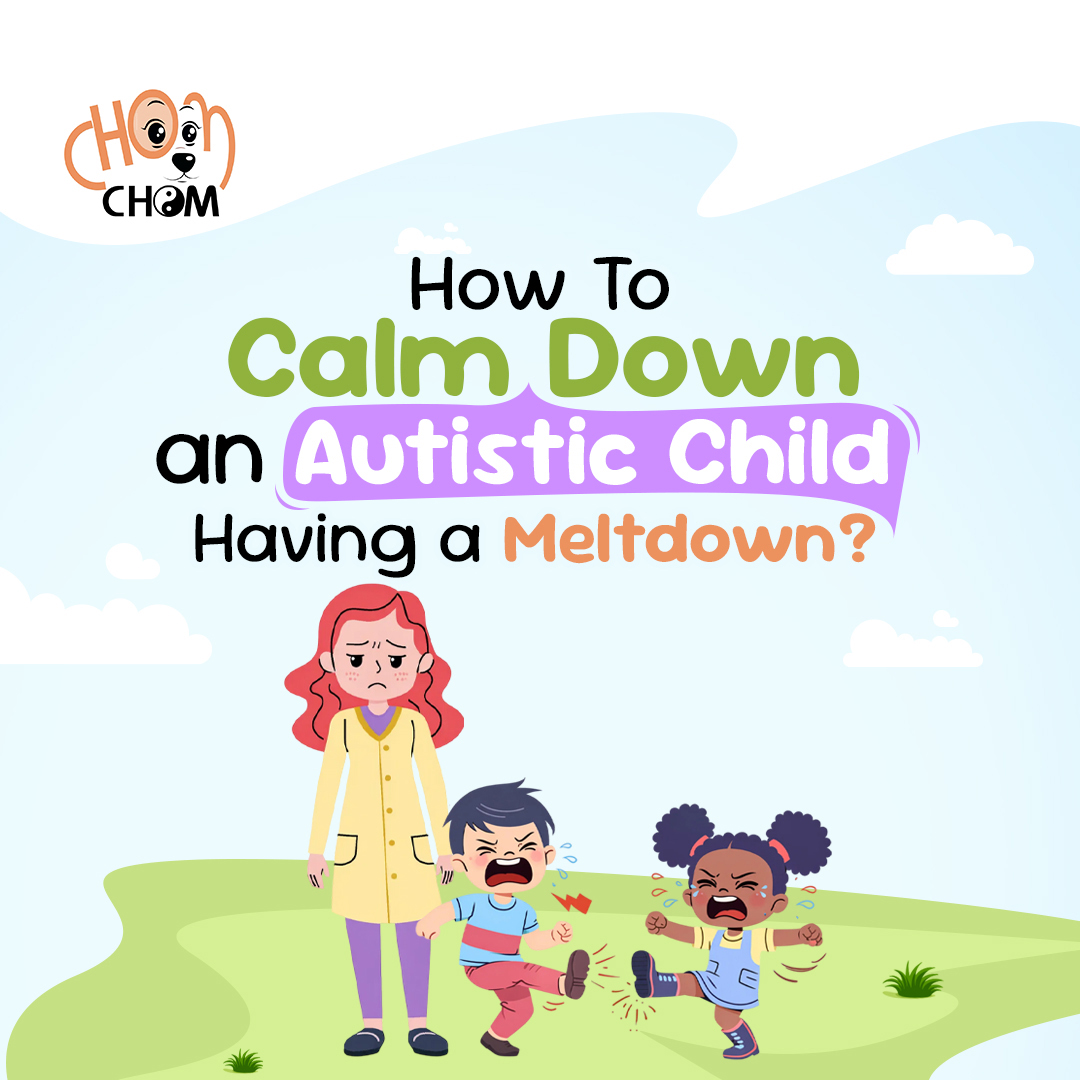
Meltdowns differ from usual tantrums. They occur when your child becomes completely overwhelmed. They can be triggered by sensory input, emotional strain, or changes in routine. During a meltdown, a child who has lost control is not choosing to misbehave.
4. Self-Injury
Some autistic children will bang their head, scratch, or bite themselves. This is usually a sign of great distress or seeking sensation and needs immediate attention and professional advice.
5. Difficulty Sitting Still and Focusing
Many autistic children have to move. It is impossible to sit still. This isn’t defiance; it is a neurological need for movement and sensory input.
6. Not Following Instructions
Your child may appear to be ignoring you because they do not process verbal instructions in the same manner as neurotypical children. They may require additional time to conceptualize what is being asked of them. Visual supports often work more effectively than words alone.
7. Social Interaction Difficulties
Autistic children may struggle with social rules. They may stand too close, interrupt conversations, or avoid eye contact. These aren’t bad manners-they’re manifestations of autism.
Effective Emotional Regulation Strategies for Autistic Children
Emotional regulation for autism works effectively when we know that these children are wired differently. There is nothing wrong with your child; their minds are unique and process differently.
Let’s focus on strategies that respect how your child processes information, regulates their emotions, and perceives the world. Each intervention is grounded in an autism-friendly principle: clarity, consistency, visual support, and positive reinforcement.
Patience will be your companion as you implement these strategies. Still, they promote enduring change by teaching skills your child can continue to draw on well into adulthood.
Learn About Your Child’s Condition
Supporting a child with autism begins with learning. Every child with autism is different. Learn about your child’s particular triggers and strengths.
- Understanding Triggers and Sensory Sensitivities
Keep a behavior log. Record what happens beforehand once challenging behaviors appear. Patterns may emerge. Loud noises, bright lights, and even certain textures can initiate distress. Knowing your triggers helps you avoid problems before they start.
Many autistic children have sensory processing differences. Sounds that are normal to you might be painful to them. Some fabrics may feel intolerable against their skin. Honor these as real physical experiences.
- Understanding Communication Differences
Your child might communicate in different ways. Some autistic young people are non-verbal or low-verbal. Others might be verbal but unable to express feelings in words. Learn to translate your child’s body language and actions as a means of communication, identifying.
- What Behaviors Are Autism-Related Versus Misbehavior?
Not every challenging behavior is deliberate defiance. When it comes to emotional regulation of your child with autism, you need to separate what your child cannot do from what they won’t do. Is your child refusing to wear certain clothes because they’re being stubborn, or because the texture causes them actual physical pain?
Behaviors driven by symptoms of autism need accommodation and support. Actual misbehavior requires gentle correction.
Practicing Gentle Consistency
It takes a steady hand and a steady rhythm to help children with autism go through development. Consistency is what makes the autistic child feel safe and predict what comes next.
- Why Consistency Is Important For Autistic Children?
Autistic children do well when life is predictable. Changing rules or not enforcing them consistently leads to puzzlement and anxiety. Try to keep expectations consistent across settings, and ask all caregivers to implement the same rules.
- The Power of Gentle Words and Calm Responses
Remember, your tone counts more than you think it does. Screaming or harsh words can overwhelm a child, causing them to shut down or act out even more. Strive for a calm, neutral voice, even when frustration wells up.
Gentle doesn’t mean permissive. You can set clear boundaries while still being kind.
- Leading By Example Through Your Own Behavior
Children learn by watching you. Model the behavior you want to see. If you want your child to stay calm when frustrated, model that calmness yourself: take deep breaths, choose gentle words, and handle your own mistakes with grace.
Clear Rules And Clear Expectations
Promoting skill building and emotional balance of an autistic child begins with clear, particular communication; ambiguous instructions confuse.
- Use Simple, Literal Language
Avoid idioms and abstract phrases. Instead of saying “Hold your horses,” say what you mean in literal terms: “Wait a minute.” Keep sentences short; use basic words, and break complex tasks into single, manageable steps.
- Be Specific About Your Request
Instead of “Be good,” say “Sit in your chair with your feet on the floor.” Instead of “Clean your room,” say “Put your toys in the blue bin.” Specific directions give your child a clear target. Tell, don’t just restrict. Instead of saying, “Stop running,” say, “Walk slowly.”
- Schedules And Visual Cues
Visual aids enable the autistic child to understand what to expect. Create a visual schedule showing the day’s activities, using picture cards to illustrate specific rules. As you address the children, point to the visuals.
By showing when a change is coming, visual timers can make transitions easier and reduce anxiety about what’s next.
Establish Rewards and Consequences
Positive reinforcement for emotional regulation, when used to support autism, is a powerful tool. Emphasize rewarding good behavior much more than punishing mistakes.
- Positive Reinforcement Strategies
Catch your child doing things right and praise specific behaviors right away. Instead of a general “Good job,” try saying, “Great job putting your cup in the sink.”
Use a reward chart with stickers or tokens. Visual progress may prove to be incredibly motivating for autistic children by helping them see the accumulation of achievement.
- Choosing Meaningful Rewards
Choose rewards that relate to your child’s interests. If they like trains, give them train stickers or extra time with trains. If they love sensory, provide them with slime or Play-Doh.
Rewards work best when given immediately; delays can weaken the connection between the behavior and the reward in your child’s mind.
- Age-Appropriate Consequences
Ensure the consequences logically relate to the behavior. If a toy is thrown, for example, halt access to that toy for a specific period of time. Natural consequences usually teach better than arbitrary punishments.
Keep consequences short. Sometimes, autistic children cannot correlate a long wait with the behavior that produced it.
- Why Time-Outs Sometimes Do Not Work?
Traditional time-outs often don’t help autistic children. Some may find isolation soothing when overstimulated, while others become more distressed.
If using time-outs, frame it as “calm-down time” with tools to help relax, rather than punishment.
Build Strong Routines
One important autism tip is the power of routine. Structure reduces anxiety and makes functioning much easier for autistic children.
- Why Structure Reduces Anxiety?
Knowing what comes next provides security. Routines create a predictable world, freeing up mental energy for learning and growing rather than constant worry. Establish routines for morning, bedtime, meals, and other daily activities and make these as predictable as possible.
- How To Ease Into Changes?
Changes are a part of life. Warn whenever possible. Use countdown timers for transitions, such as “In five minutes, we’ll clean up,” rather than making sudden demands.
Prepare your child for bigger changes days or weeks in advance. Use social stories or pictures to explain new situations.
- Following Through On Promises
Keep promises. Be sure to follow through on a reward or consequence. Broken promises erode trust, making future development much more challenging.
Teach Self-Calming Techniques
When trying to calm a child with autism, focus on teaching skills they can use independently. The process of self-regulation develops over time.
- Sensory Tools
Prepare a calm-down kit with items like weighted blankets, stress balls, fidget toys, or noise-canceling headphones. These will help your child cope with the sudden surge of sensory input.
Provide a quiet space for your child to retreat to when feeling overwhelmed, complete with calming sensory items. It provides a safe place to regulate emotions.
- Breathing Exercises
Introduce simple breathing techniques. For younger children, this could be “smell the flower, blow out the candle.” Practice these during calm moments so they can use them when stressed.
Make breathing visual by using bubbles. Blowing bubbles encourages controlled breathing and is a very calming activity.
- Emotion Identification And Expression
Build your child’s emotional vocabulary by using picture emotion charts. Throughout the day, point to faces and name the feelings.
Role-play brief scenarios about expressing needs like “I need a break” or “Too loud,” to give your child words for their experience.
- Comfort Songs
Music can also soothe emotions. Find songs that calm your child and make playlists for any mood. Singing familiar tunes during more challenging moments can help recalm them.
- Physical Activity As An Outlet
Movement provides autistic children with nervous system regulation. Incorporate active time into daily routines, such as trampolining, walking, or dancing to music.
Physical activity before challenging activities was also noted to help children focus.
Create A Safe Environment
Severe symptoms of autism indeed call for thoughtful environmental modifications. The environment dictates behavior.
- Remove Dangerous Items
Childproof thoroughly because autistic children often do not realize danger. Keep cleaning supplies, medications, and sharp objects under lock and key. If your child is a big climber, fasten furniture to the walls—Pad sharp corners and edges.
- Understanding Replacement Behaviors
If your child engages in self-injurious behavior, offer safer alternatives. For example, if they self-bite, offer a chewy toy; if they bang their head, then provide the crash pad or pillow to hit instead. Replacement behaviors satisfy the same sensory need safely.
- Sensory-Friendly Spaces
Minimize sensory overload at home by replacing harsh fluorescents with soft lighting and reducing background noise. Provide organizational spaces, free of clutter. Whenever possible, involve your child in shaping their environment, allowing them to make choices that feel comfortable to them.
- Never Use Physical Punishment
Physical punishment hurts autistic children deeply, erodes trust, heightens anxiety, and instigates aggression. It doesn’t help them understand what they are doing wrong. Gentle, instructional strategies work better and help you maintain your relationship with your child.
Age-Specific Approaches
While the core principles of autism-related emotional regulation remain consistent across ages, the specific strategies employed should certainly be differentiated. After all, a child with limited language and a short attention span requires different approaches than one who can converse and understand larger, more delayed reward systems.
What is most important is a child’s current developmental abilities, not his chronological age: A verbal, bright, and obedient seven-year-old might still require modified versions of toddler strategies, while a highly verbal five-year-old may respond to higher-level techniques.
Match your strategies to where your child is now, not where the age charts say he should be.
Emotionally Regulating Autistic Toddlers
Toddlers with autism need more patience and simpler approaches.
- Shorter Attention Spans Require Immediate Rewards
Toddler attention spans are short. Reinforce positive behavior immediately. A sticker chart that covers several days will not inspire a toddler. The sticker or reinforcement must be given within seconds of the target behavior.
- Extra Visual Supports
Lean on pictures and fewer words. Whenever possible, show rather than tell. Do what you want your toddler to do. Make simple, two-step visual sequences. “First this, then that” helps toddlers understand what comes next.
- Simplified Language
One- or two-word directions are best. “Gentle hands” instead of “Don’t hit your sister.” “Sit down” instead of “I need you to sit in your chair now.” Use the exact phrases over and over again so that they learn what each phrase means.
High-Functioning Autistic Children
Emotionally guiding a high-functioning autistic child can allow for more complexity while keeping in mind their special needs.
- More Complex Reward Systems
Older children can work for bigger rewards over time. Token economies work well: they reward positive behaviors with points, which can be traded for preferred items or activities. Let your child help design the reward system to increase buy-in and motivation.
- Deeper Conversations about Expectations
High-functioning children can understand explanations. Discuss why rules exist and help them to see how behaviors affect others, giving concrete examples from their life. Role-play difficult social situations and practice appropriate responses together.
- Building on Their Strengths
Most autistic children have strong interests or talents. Utilize these strengths as teaching tools. If your child loves schedules, invite them to help you create family routines. If they excel at art, they use drawing to process emotions.
Celebrate what your child does well to build confidence alongside teaching new skills.
When To Seek Professional Help?
No parent has all the answers, and guiding a child with autism often calls for specialized knowledge. Needing professional support is not a sign of failure; it’s innovative and proactive. Therapists and specialists bring training in techniques you can’t learn from blogs alone.
They can observe your child, notice patterns you might not, and tailor strategies to your unique situation. It is a sign of strength, not weakness, to know when you have reached the edge of what you can handle on your own.
ABA therapy employs structured reinforcement to teach positive behaviors. Board-certified behavior analysts can create a personalized plan for your child. Occupational therapy helps with sensory processing and daily living skills. Speech therapy supports communication challenges.
Behaviors that threaten the safety of others or your child require immediate help. Examples of such behaviors include severe self-injury, aggression, and property destruction. Many hospitals and autism centers offer parent training programs that provide you with strategies tailored to your child.
What Should Be Avoided When Emotionally Regulating An Autistic Child?
Parenting is full of stressful moments, and nobody’s perfect. Some days, your reactions will be off, or a technique will backfire. That is normal, and it does not make you a bad parent. However, even some methods of emotional regulation that may appear to work for neurotypical kids can actually harm autistic kids.
These methods can increase anxiety, damage trust, exacerbate behaviors, and stunt emotional growth.
Understanding what doesn’t work helps you avoid many pitfalls while maintaining your relationship with your child. If you have used any of these methods so far, let go of that guilt and pledge to do it better next time.
1. Physical Punishment
Spanking, hitting, or other physical punishments can traumatize autistic children. This actually increases anxiety and behavioral problems and teaches children that violence is a solution. It also impairs the trust between you and your child-a trust that takes years to rebuild.
2. Yelling, Threatening, Or Criticizing
Harsh words cut deep. Autistic children tend to internalize criticism more than typical children. They may end up anxious or depressed from constant negative feedback. Yelling can overstimulate an already overwhelmed nervous system, worsening behavior rather than improving it.
3. Time-Outs May Be Rewarding For Some Children
To some children with autism, time-outs may feel like isolation or an escape from an uncomfortable moment; therefore, rewarding time-outs instead of correcting the behavior. Observe how your child responds to time-outs and adjust accordingly.
4. Removing Sensory Comfort Objects
Comfort items help autistic children regulate themselves. Taking away a weighted blanket or favorite toy as a punishment takes away their coping tools, escalating distress, and potentially worsening behavior.
5. Unrealistic Expectations
Don’t expect your autistic child to act like their neurotypical peers. They have strengths and challenges that set them apart. Pushing them beyond what’s developmentally appropriate creates frustration for everyone. Establish goals that reflect your individual child’s development, not age norms or expectations.
Maintaining A Positive Outlook
Parenting through autism is very rewarding, yet extremely exhausting. Some days will push your patience to its limits, making you wonder if you are doing enough or doing things right. Those feelings are normal.
The reality is that your mental health directly impacts your child’s development and behavior. When you’re burnt out, frustrated, or hopeless, your child senses those feelings. On the flip side, approaching challenges with optimism and self-compassion models resilience that your child will internalize. Taking care of yourself isn’t selfish-it’s an essential requirement of effective parenting.
Here’s how to keep perspective and protect your mental health while raising your autistic child.
Focus On Progress, Not Perfection
Your child will have good days and tough days. Measure growth over months – not days. Small improvements matter. Your child doesn’t need to be “fixed”-they need support to thrive as themselves.
Celebrating Small Wins
Did your child use words instead of hitting today? That’s huge! Did they try a new food? Celebrate it! Acknowledge every step forward, no matter how small that may seem.
Keep a journal of joyous moments. On hard days, go back and remind yourself how far you have come.
Building Your Own Support System
Connect with other autism parents through the support groups, either online or in your local community. Share experiences and strategies. You’re not by yourself on this journey.
Take breaks when you need them. Plan for respite care. Taking care of you makes you a better parent.
How Does Positivity Influence Your Child’s Attitude?
Children pick up on their parents’ emotions. When you approach challenges with hope and creativity, your child learns resilience. Your belief in them shapes their self-image.
Emphasize the positives in your child, not the negatives. Please encourage them to view themselves as capable and worthy.
Chomchom Tech: Where Play and Progress Meet, And Every Child Will Shine.
How do you emotionally regulate a child with autism? With patience, understanding, and strategies tailored to their unique needs. Focus on teaching rather than punishing—clear expectations, consistent routines, and praise.
Every child with autism has something special to offer. What you need to avoid is changing them; instead, help them be themselves. It’s the progress that takes more time, but if appropriately supported, your child will shine.
ChomChom Tech offers therapist-approved games for children between the ages of 4 and 7, dealing with behavioral challenges, ADHD, and autism. Our bite-sized activities build emotional resilience, executive functions, and problem-solving skills while keeping your child engaged. Join over 1,000 families who’ve seen real progress.
Discover ChomChom Tech now and provide your child with the means to succeed.