If you are a parent of an ADHD child, there are times when you feel like constantly putting out fires. From morning routines to nighttime meltdowns, the journey might feel like an endless stress loop.
Your little one might argue, swear, or throw things over the smallest change in plans. It might have made you wonder: Am I doing something wrong?
Those feelings of guilt, frustration, and confusion are very real, and you are not alone. In fact, it isn’t a sign of failed parenting or your child’s misbehaviour.
ADHD is a neurodevelopmental condition that affects your child’s impulse control, emotional regulation, and attention. Something that might look like bad behaviour is often the little one struggling to cope with their surroundings.
Hence, parents need to learn what not to do with a child with ADHD to gently guide them without adding stress or shame.
If you’re looking for clear, calm, and practical advice to help your ADHD kid, then you have come to the right place.
In this blog, we discuss ADHD in kids, the reasons behind the triggers, the key mistakes many parents make, and simple changes that can help at home.
What is ADHD in Kids?
Attention deficit hyperactivity disorder (ADHD) is not a behavior problem or a character flaw. It is rather a neurodevelopmental condition that affects how the brain manages attention, impulses, and emotions.
For a child with ADHD, staying focused or controlling sudden reactions can be quite difficult. It is because their brains develop and work differently. It may cause issues with their ability to sit still or practice self-control.
The situation feels much harder than it does for other kids, even though they clearly want to behave well. ADHD usually shows up in three main patterns:
- Inattentive – Inattentive ADHD means the child struggles with maintaining attention. They may forget instructions or face difficulty finishing tasks.
- Hyperactive–Impulsive – Hyperactive–impulsive ADHD means the child is quite active and unstable. They might interrupt constantly and act before thinking.
- Combined – The children having combined ADHD show both the signs of impulsivity and hyperactivity at once.
What Does ADHD Look Like In Daily Life?
Now that you are aware of ADHD behavior issues and how it is not something a child can control, let’s try to understand what the signs look like in daily life.
Parents sometimes find it difficult to distinguish between regular behavior and ADHD signs. It is natural to expect very young children to be easily distractible and hyperactive.
However, there are certain ways to distinguish the signs early and offer them the right support. For parents, this can feel like a cycle of reminders, corrections, and guilt.
But when you see ADHD as a brain difference instead of misbehavior, it becomes easier to respond with care instead of blame.
The common issues that an ADHD child goes through are:
- Trouble listening when someone is talking, even when it’s important.
- Starting things but rarely finishing them.
- Blurting out answers, swearing, or saying hurtful things before realizing.
- Fidgeting or finding it hard to stay still.
What Makes ADHD Symptoms Worse in Children?
Parenting an ADHD child is often difficult, as you have to keep acquiring knowledge and be patient. The most difficult part is disciplining the kid, as they can be sensitive to stimulation.
ADHD and saying hurtful things can go hand-in-hand, as the child doesn’t have control over their mind. Punishing them for their rude dialect or violent outbursts may not be a wise thing to do.
You have to understand that the symptoms of the condition don’t usually appear out of nowhere. They rise when the child’s brain is overloaded with noise, stress, emotions, or sensory input.
Instead, they need a calm and supportive approach that can make them feel safe. As a parent, you need to ensure that the child gets predictable days, calmer environments, and clearer emotional support.
When these needs are missing, ADHD behavior issues and ADHD aggressive behavior can spike quickly. Recognizing these triggers can help you reduce their meltdowns and aggression.
- Overstimulation
Children with ADHD are quite sensitive to their surroundings. They are mostly comfortable in peaceful and calm spaces. Loud noises, crowded rooms, flashing screens, or multiple tasks at once can overwhelm them.
In such situations, their brain struggles to organize their thoughts. They face the issue of deciding what and how to pay attention to. When triggered, they can shut down and refuse to talk.
- Tiredness and Poor Sleep
Poor sleep and tiredness act as a significant trigger in ADHD. They can feel restless rather than drowsy, leading to intense behavioral issues.
When a child with ADHD is tired, their brain has even less ability to manage emotions and impulses. Bad habits like late night or irregular sleep schedule can turn a calm day into one filled with irritability.
- Emotional Overload
ADHD in children often involves sensory and emotional overload. The brain cannot efficiently process difficult situations. Even the strong feelings of frustration, embarrassment, or anxiety can trigger the child’s mind.
Their brain actually goes into the fight or flight mode. It is a way their mind tries to protect or calm them. When triggered, an ADHD kid may say hurtful things or swear before they think or react violently to teasing or correction.
- Sensory Issues
Sensory issues also play a role in triggering the signs. The overload happens when the brain cannot properly process excessive environmental changes.
It causes ADHD-related aggressive behavior, stress reactions, and meltdowns in children. Even simple things like tight clothes, bright lights, itchy tags, or loud chewing can make ADHD symptoms worse.
- Unexpected changes
Many children with ADHD thrive on routine. When plans change suddenly or go against their structured routine, they start panicking. It can cause emotional dysregulation and enhanced hyperactivity due to challenges with flexibility.
Situations like delayed pickup, a canceled outing, or a surprise assignment can feel out of control. That sense of instability leads to resistance, arguing, and tantrums.
Things That Should Not Be Done With an ADHD Child
How to stop an ADHD child swearing? It is one of the most common concerns of parents who are unsure of the reason behind their child’s behavior. Many parents accidentally make ADHD behavior issues worse by reacting in ways that feel natural in the moment.
You might scold or punish the child to control their actions. However, it can backfire and cause harm.
The following are the things that you shouldn’t do to a child with ADHD:
- Don’t shame them
Name-calling or harsh labels are the worst kind of behavior an adult can show towards an ADHD kid. Negative or blaming words can cut deep into the mind of the child who already feels different.
Saying things like retard, lazy, bad kid, or troublesome can stick in their mind for years. As they grow up, these memories can damage their self‑worth.
Even joking about a child’s intelligence or stupidity can normalize hurtful language. Gradually, a child will feel more isolated. When a child with ADHD says hurtful things or swears, it’s important to address the behavior without attacking their character.
- Don’t Yell or Get Angry
When your child swears, throws something, or hits you, the common instinct is to yell back or punish them. However, anger and yelling are not the right approach for handling an ADHD kid.
When pressured, their brain will feel overstimulated, making the situation worse. Children with ADHD often struggle to control impulses in the moment. Your harsh reactions could increase their fear and defensiveness.
- Don’t Ignore Meltdowns
Some parents believe that ignoring the tantrums or aggression can be a good way to handle the child. However, such actions can leave a child feeling more alone and misunderstood.
A kid shows aggression as a way to communicate their suppressed feelings. Their inability to explain their emotions often leads to an outburst when triggered. Ignoring the behavior without teaching better alternatives can make ADHD symptoms worse over time.
- Don’t compare them to other kids.
Comparison is again the worst way to tackle the ADHD symptoms in a kid. Using phrases like “Why can’t you behave like your sibling?” or “other kids don’t act like this” is deeply unhelpful. They ignore the brain‑based differences in ADHD and make your child feel like they’re failing on purpose.
Instead, focus on their strengths and progress. Recognition of effort helps build motivation and self‑esteem.
- Don’t forget structure.
ADHD children feel secure when the lifestyle moves in a structured pattern. A home that has no clear rules or routines can feel like constant chaos for a child.
However, structure doesn’t mean strictness. You have to give your child a predictable framework. It is done to focus on learning how to behave. When they know how things are done or will happen, they remain calm.
Parenting Techniques for ADHD: Things That Work
Parenting a child with ADHD is one of the hardest and most meaningful journeys. You may sometimes feel like you’re doing everything wrong, but the truth is that you’re learning to handle situations with your child.
To learn how to support a child whose brain works differently, you have to be patient and self‑compassionate. Learning ADHD techniques for parents can be a good way to handle the tantrums properly.
However, it doesn’t mean trying to be perfect or giving up your own needs. It means approaching your child with kindness, even on hard days.
Here are some helpful ADHD parenting tips:
- Stay Calm
Children with ADHD often do better when they know what to expect. Rather than being angry or defensive, a parent needs to stay calm and look for solutions. You need to cultivate your own thought process through mindfulness.
Try pausing before reacting and try affirming them. You should use a steady and low voice to mirror emotional regulation. Giving calm and consistent responses to misbehavior will create a sense of safety. It will help reduce ADHD behavior issues and outbursts.
- Use simple instructions
Long explanations or multiple steps in one sentence can confuse a child with ADHD. Instead of saying, “Go do your homework and put on your toys in the basket, try a step-by-step approach.
Say, “First, finish your homework.” “Then, pick up your toys.” – “Finally, put them in the basket.” This breakdown will make it easier for their brain to follow through.
- Praise small wins
Children with ADHD are prone to receiving criticism. It imbues fear and distrust in people. A parent should try to improve their self-esteem by appreciating their small wins.
Giving them rewards when they manage to sit quietly for a few minutes or when they finish a small task can work wonders. It will motivate them to work on their behavior and work.
- Ask for help
Parenting a child with ADHD can be exhausting. If you’re constantly angry, drained, or hopeless, you don’t need to go through it alone.
In such situations, taking the help of a professional can be quite helpful. They can help prepare a proper adolescent ADHD treatment to guide parents in managing behavioral challenges, improving focus, and building healthier daily routines.
They also support parents by offering practical strategies, emotional guidance, and tools to reduce stress. You can talk with the experts to learn ways to improve communication at home.
- Playing Sensory Games
Another great parenting strategy for ADHD is using sensory-based activities to help soothe your child during overwhelming situations. Simple options like soft playdough or slime can be very effective. It can help shift their attention and provide a calming tactile experience.
Another smart way of regulating their attention is through a fun and interactive game. Certain interactive games for autistic children can help ease stress during a meltdown.
These games usually come with gentle visual and sound-based stimulation that can comfort the child during triggering situations. Using such approaches can help your child to calm down and regain emotional balance.
Give Your ADHD Child the Right Support with Chomchom Tech
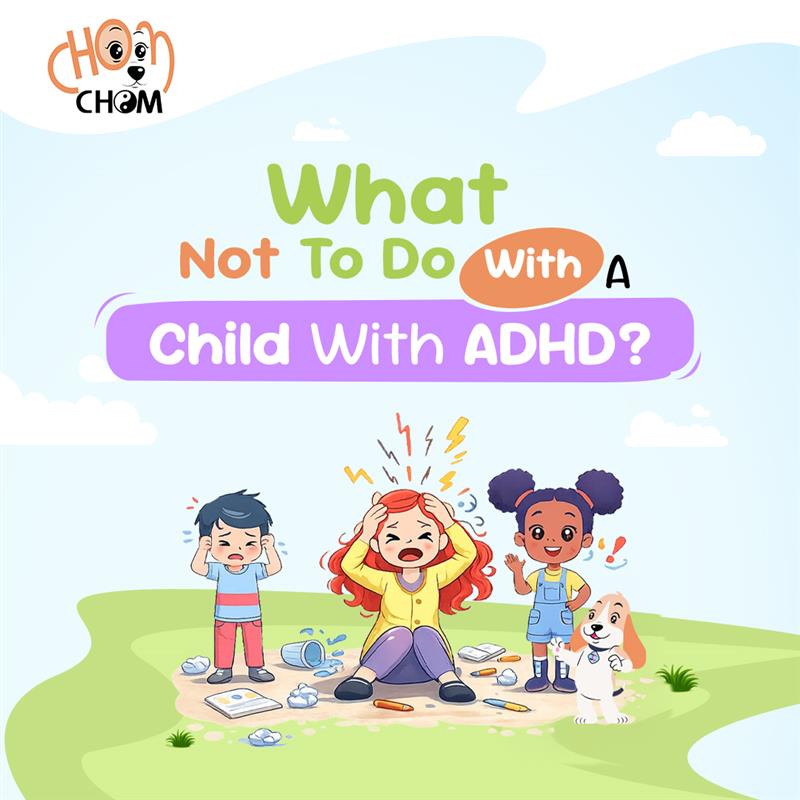
What not to do with a child with ADHD? This is a question that keeps concerning parents. They feel stuck in a cycle of frustration, yelling, and guilt.
Parents often wonder where they’re going wrong. The truth is that ADHD is not a bad behavior but a brain‑based difference affecting attention, impulsivity, and emotional control. When parents don’t take a calm approach, the issues can make the symptoms worse.
At Chomchon Tech, we help parents offer the right support to their little one. Our sensory‑based games are designed specifically for neurodivergent kids.
These tools are built to help children with ADHD, autism, and other sensory needs feel calmer, focused, and in control. By letting your kid play our game, you can learn how to calm down an autistic child having a meltdown.
The app lets you track your child’s progress to develop gentle and practical ways to support your child’s development.
Explore our range of sensory games today and help your child feel safe and confident.