Finding out that your kid has ADHD is an overwhelming experience. However, as a parent, it is your duty to help them evolve despite it. Several parents resort to neurodiverse schools, support groups, and counselling sessions.
However, one must understand that neurodivergence is an individualized experience, meaning no two children with ADHD are the same. Hence, schooling and other group activities become a triggering experience for most.
Here is where homeschooling a child with ADHD appears as a boon.
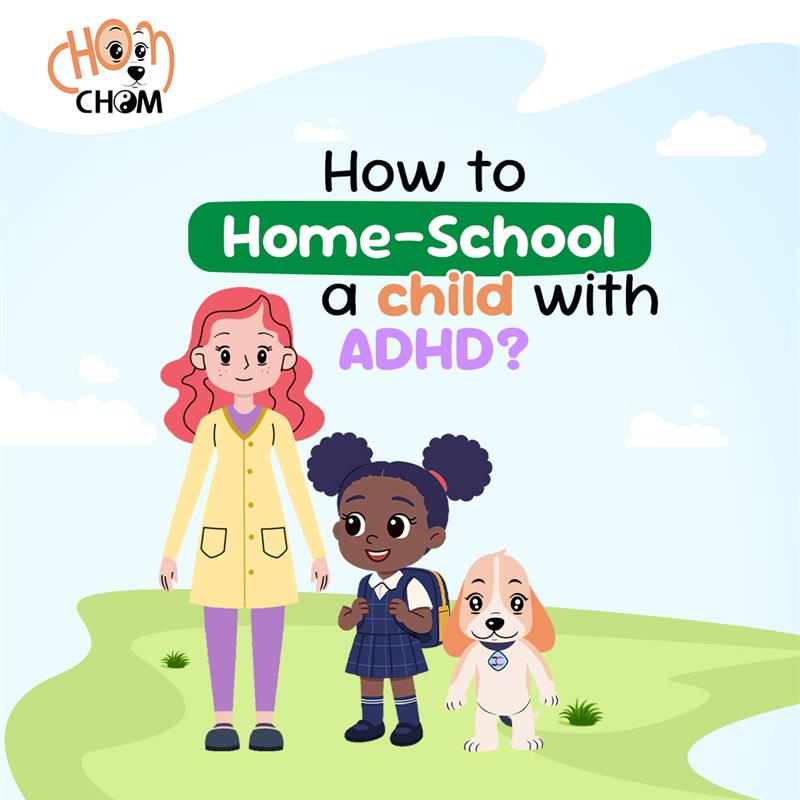
So, how to homeschool a child with ADHD? Should I plan my child’s academics differently? Are there different techniques for teaching a neurodiverse child?
Yes, ADHD homeschool programs are beneficial and can be customized for your child’s needs. However, the first step is understanding how your child functions with their ADHD. What triggers them or shuts them down is closely linked to the homeschooling experience.
Without further ado, let us explore ADHD and homeschooling and curate the best homeschool curriculum for your child, tailored to their needs.
How a Neurodiverse Brain Functions? Why does Ordinary Schooling become overwhelming?
Neurodivergence is an umbrella term for a range of diagnoses – ASD, ADHD, Down syndrome, Dyslexia, OCD, and Intellectual Disabilities.
Each is unique and troubles various aspects of a livelihood. For instance, ASD makes common episodes of communication a challenge, a lack of understanding of social cues, and leads to other kinds of medical problems like sleep disorders and epilepsy.
On the other spectrum, ADHD makes it really difficult for children, and even adults, to thrive in school, the office, or any group setup. Youngsters with ADHD tend to have lower self-esteem, lack organizational skills, and avoid daily activities.
So, as a parent, when you are aware that your child is showing signs of ADHD, they will naturally struggle in school.
Why does an ADHD homeschool schedule work?
When it comes to homeschooling, a customised learning approach offers a supportive environment for the neurodivergent mind. While adjusting to the routine takes some time, in a known space, these children adapt better.
With a calm study setup, composed instructions, and activities aligned with their interests, homeschooling has shown ideal results for children with ADHD. One moment, you are teaching them to build a daily habit slowly, and the next, they are effortlessly studying from school textbooks. With practice, it becomes that simple.
Homeschool Curriculum for ADHD Students – A Step-by-step Guide
When it comes to homeschooling an ADHD child, the goal is to provide a comfortable, quiet space where their brain can calm down.
The calming effect helps them adjust and adapt to the situation, and creates the willpower to learn.
Irrespective of their age and what you are trying to teach, a calm space will help you achieve more.
Here are some practical tips to avoid the various problems with homeschooling –
• Understand the Neurodivergent Nature
Before you become a teacher, learn. While neurodivergence is truly diverse, today, let’s focus on ADHD.
Attention-Deficit/Hyperactivity Disorder is a prevalent neurodevelopmental condition among children. It begins in early childhood and continues into adulthood.
In children, the obvious signs of ADHD are lack of concentration, inconsistent behavior, being overly active or impulsive behavior, inability to sit with a singular task, and completing it.
While these are the symptoms, it is vital to consult a professional for a complete diagnosis. ADHD sometimes co-exists with other neurological issues, and leads to other problems like social anxiety and depression.
As a parent, it is vital to know about the condition before considering a homeschool setup. As the instructor, the idea is not to lose patience and modify the instructions based on the child’s needs.
• Let Go of the Traditional Classroom Mindset – You are Bigger Than That
You have an ADHD kid at home, and there is no harm in it. Legendary people have had ADHD; Albert Einstein is suspected to be one; and there is truly nothing wrong with your kids.
So, for one moment, let go of the idea of traditional schooling. Yes, it is a fun space to learn; however, it is not for a child with ADHD.
Children with ADHD require an easy, predictable routine that includes specific time for learning and activities that are aligned with what they enjoy.
• For ADHD, Individualization Works like Magic
When teaching a child with ADHD, keep it as personalized as possible. Each child is unique; therefore, the attention required is unique.
Focus on crafting a bespoke study plan that they are comfortable with. Try to understand their needs, experiment with study approaches – visual learning, sensory learning, kinesthetic, and more.
If these options do not work, look for other learning methods. Also, make the academic setup functional. Allow your child to ask questions, give them proper answers; if things do not work, alter the methods to make it more suitable.
• Keep it Simple & Organized
ADHD brain works in a system – it prefers system and organization. So, start by making the learning process simple and organized.
Begin by making the space clutter-free, calm, well-lit, and completely set up. You can use charts and timers to create a routine. Calm down strategies for kids also help in a homeschool setup.
When tasks are completed, check the boxes and let your child celebrate a little. Simple words of praise – ‘Wow! You were so good. ‘Look, if you are getting good at it,’ makes the learning journey more effective.
Also, focus on reducing background noise; remove unnecessary items that you believe will trigger your child, or colors that may distract them.
The ADHD brain works very fast; it gets easily distracted and jumps from one to the other without fully consuming each. Learning can be a challenge in the wrong atmosphere.
• Use Practical Learning Strategies
Learning for the ADHD mind is a struggle; therefore, it needs to be handled in chunks. Whichever subject you are focusing on, start by sectioning it into smaller sections to make it palatable.
It is difficult to make an ADHD child sit for hours; forcing them to study for continuous sessions is indeed a hassle. Make the learning sessions shorter by breaking them into smaller lessons and assignments. Use charts, diagrams, infographics, and similar materials to enhance the study sessions and achieve greater impact.
Also, include regular breaks and fun times to keep the learning sessions alive.
There are several ways to make homeschooling more manageable, practical, and beneficial for a child with ADHD. Remember, you are not out there to achieve something great on the very first day. It is a buildable act – let your child get accustomed to the learning pace and gradually learn the correct way to ingest knowledge.
Neurodivergence, Homeschooling, and ChomChom
So, is homeschooling good for ADHD? Yes, it is the smartest option. Can ChomChom help in this matter? Yes, it was designed for that purpose.
ChomChomTech has been an active part of several neurodiverse journeys – helping children with ADHD build focus, establish routines, and improve their attention.
Explore the bite-sized games and mindfulness activities designed for children with ADHD, ASD, PDA, and behavioural disorders. Integrate therapeutic sessions into the learning phase to make homeschooling both functional and lucrative.
Download the App and Learn More!